
© Bronzewing Farm 2013-26
_gray.png)


Mountain Pepper is high in antioxidants (higher than blueberries, Konczak
2009), and a diet high in antioxidants may reduce the risk of many
diseases, including heart disease and certain cancers.
The Australian Broadcasting Corporation (ABC) in Tasmania ran this story
about the possible use of the high antioxidants in Tasmanian Mountain
Pepper Berry in the cosmetics industry. This video clip was posted on the
ABC website on Fri Mar 29, 2013 8:15pm AEDT but has now expired.
Nutritional and Health aspects of
Tasmanian Mountain Pepper
Antioxidants:
The story derives from relatively recent research on the properties of
Australian Native Foods. These research reports are:
•
Read, C. 2012. Nutritional Data for Australian Native Foods: Supporting
the Food Standards Australia and New Zealand Nutritional Panel
Calculator. RIRDC publication No 12-099
•
Izabeka Konczak et al. 2009 Health Benefits of Australian Native Foods
- An evaluation of health-enhancing compounds. RIRDC publication No
09-133
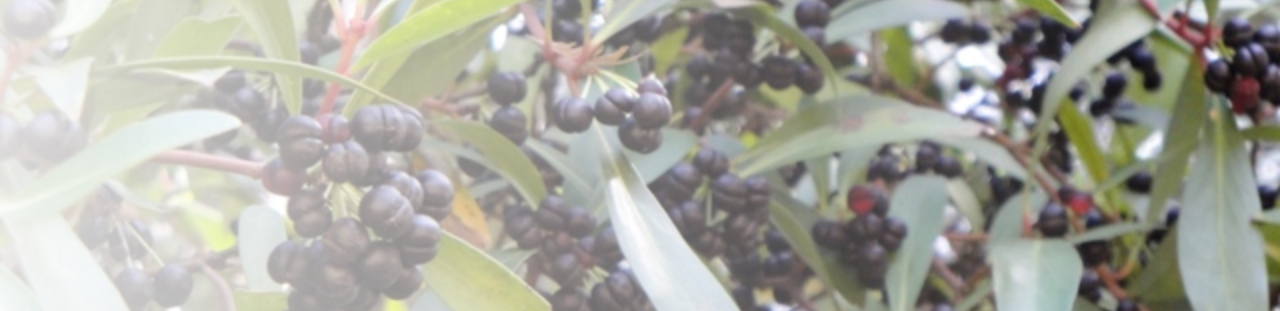
Anthocyanins:
Mountain pepper berries aren't really black, more of a very, very
dark red (think red wine grapes which look bluish when
harvested). This red-black colouration is due to high levels of
anthocyanins (specifically cyanidins - 29.4 mg/g ; Konczak
2009). Anthocyanins are strong antioxidants but they can also
give a great reddish colour to your cooking. The anthocyanins
can be brought out of even our dried Mountain Peppercorns.
Lemon juice, vinegar and brine are a great way to extract both
colour and flavour out of the peppers.
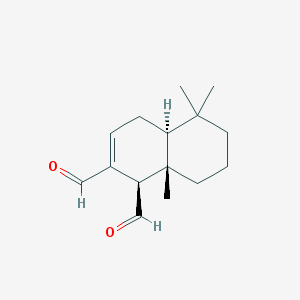
The biological activity of polygodial has been reported in the
scientific literature to include antifungal and antimicrobial
activities, anti-hyperalgesia, potent attachment-inhibitory
activity, insect antifeedant activity, antinociception,
vasorelaxation action in vessels of rabbit and guinea pig, anti-
inflammatory and anti-allergic activities (source: wikipedia).
Antimicrobial activity:
Tasmanian Mountain Pepperberries had the highest
antibacterial activity of any Australia bushfood - with high
activity against both foodborne human pathogens and
common food spoilage bacteria. Interestingly, the peppers had
little activity against tested lactic acid bacteria which are
beneficial microorganisms in foods such as cheese, yoghurt,
sauerkraut, etc:
•
Winnett, V. et al, 2014, The potential of Tasmannia
lanceolata as a natural preservative and medicinal agent:
antimicrobial activity and toxicity. Pharmacognosy
Communications, 4(1), 42-52
•
Zhao & Agboola, 2007 Functional Properties of Australian
Bushfoods. RIRDC publication No 07/030





_gray-1.png)

© Bronzewing Farm 2013-26
Mountain Pepper is high in antioxidants (higher
than blueberries, Konczak 2009), and a diet high
in antioxidants may reduce the risk of many
diseases, including heart disease and certain
cancers.
The Australian Broadcasting Corporation (ABC) in
Tasmania ran this story about the possible use of
the high antioxidants in Tasmanian Mountain
Pepper Berry in the cosmetics industry. This
video clip was posted on the ABC website on Fri
Mar 29, 2013 8:15pm AEDT but has now expired.
The story derives from relatively recent
research on the properties of Australian Native
Foods. These research reports are:
•
Read, C. 2012. Nutritional Data for
Australian Native Foods: Supporting the
Food Standards Australia and New Zealand
Nutritional Panel Calculator. RIRDC
publication No 12-099
•
Izabeka Konczak et al. 2009 Health Benefits
of Australian Native Foods - An evaluation of
health-enhancing compounds. RIRDC
publication No 09-133
Antimicrobial activity:
Tasmanian Mountain Pepperberries had the
highest antibacterial activity of any Australia
bushfood - with high activity against both
foodborne human pathogens and common
food spoilage bacteria. Interestingly, the
peppers had little activity against tested lactic
acid bacteria which are beneficial
microorganisms in foods such as cheese,
yoghurt, sauerkraut, etc:
•
Winnett, V. et al, 2014, The potential of
Tasmannia lanceolata as a natural
preservative and medicinal agent:
antimicrobial activity and toxicity.
Pharmacognosy Communications, 4(1),
42-52
•
Zhao & Agboola, 2007 Functional
Properties of Australian Bushfoods. RIRDC
publication No 07/030
Anthocyanins:
Mountain pepper berries aren't really black,
more of a very, very dark red (think red wine
grapes which look bluish when harvested). This
red-black colouration is due to high levels of
anthocyanins (specifically cyanidins - 29.4
mg/g ; Konczak 2009). Anthocyanins are strong
antioxidants but they can also give a great
reddish colour to your cooking. The
anthocyanins can be brought out of even our
dried Mountain Peppercorns. Lemon juice,
vinegar and brine are a great way to extract
both colour and flavour out of the peppers.
The biological activity of polygodial has been
reported in the scientific literature to include
antifungal and antimicrobial activities, anti-
hyperalgesia, potent attachment-inhibitory
activity, insect antifeedant activity,
antinociception, vasorelaxation action in vessels
of rabbit and guinea pig, anti-inflammatory and
anti-allergic activities (source: wikipedia).
What about the spicy 'heat' (the polygodial)?:


- Home
- All about Tasmanian DEVIL Mountain Pepper
- >>> The Plant
- >>> Human Health & Nutrition
- >>> Pepper Berry or Leaf?
- >>> Cultivation & Agronomy
- >>> Harvesting
- >>> Drying Techniques
- >>> Devilish Taste
- >>> Celebrity Chef Use
- >>> Why buy our Pepper?
- >>> Use & Tips
- Pepper Shop
- >>> Mountain Pepper
- >>> Tasmanian Pepper Mills
- About us/News & Media/Contact us
- >>> About us
- >>> News and Media
- >>> Wholesale/Bulk Order Enquiry
- >>> Contact us