
© Bronzewing Farm 2013-26
_gray.png)


Mountain Pepper Production:
Berry Harvesting: Bronzewing Farm
®
Tasmanian
DEVIL
®
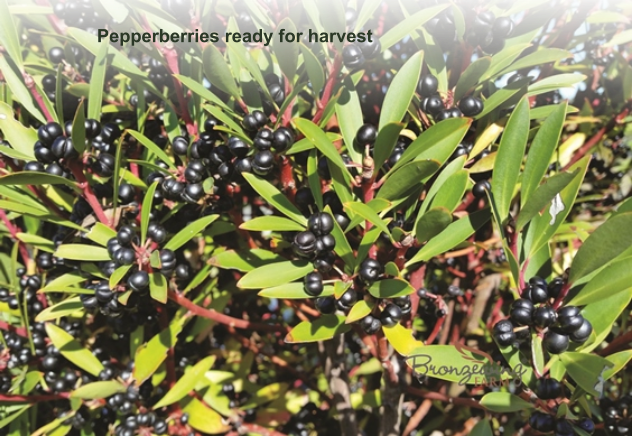
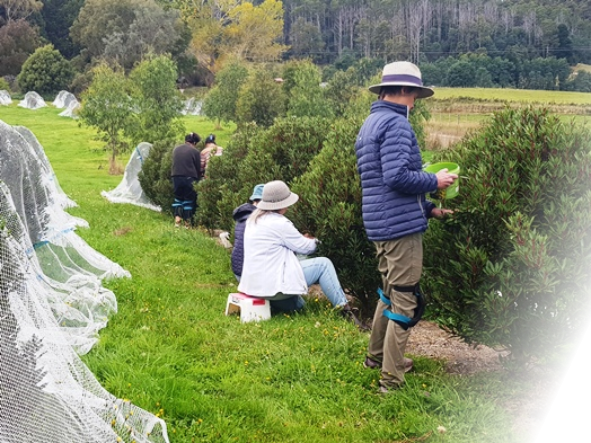
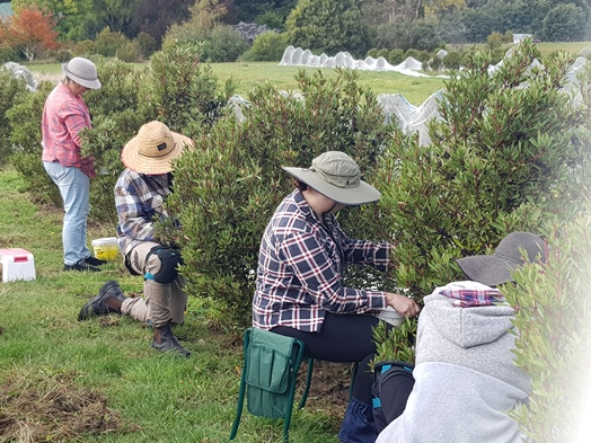
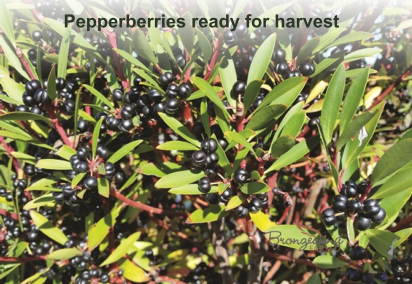
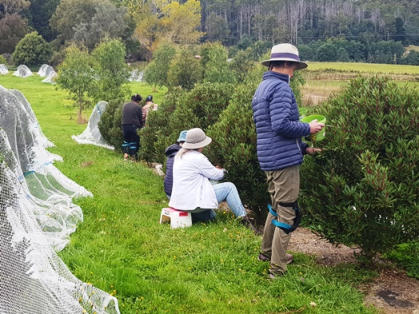
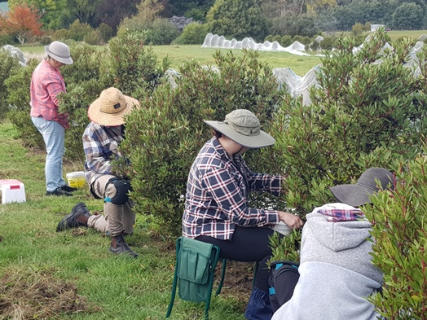
Mountain Pepperberries are hand-harvested from
the farm between April and June every year.
Hand-harvesting is necessary because (a) the berries
don't seem to want to drop off naturally (in our
greenhouses we can have last season's berries still on
the plant when the current season's berries are
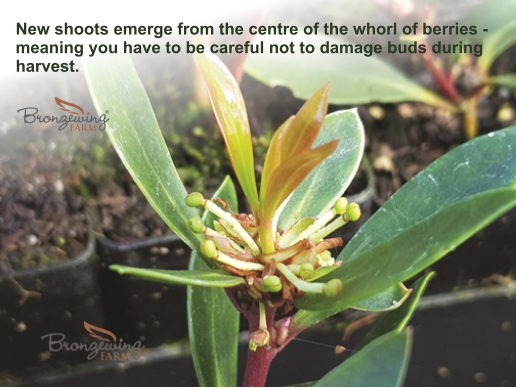
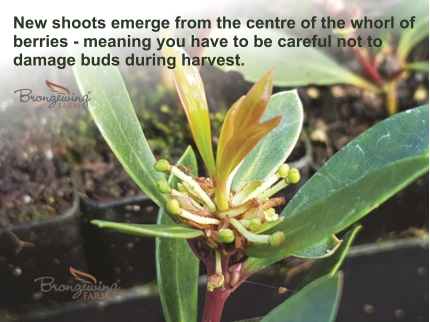
developing), and (b) it is important not to damage the new
buds/growth which develop in the centre of the whorl of
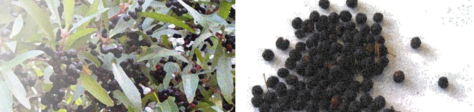
berries. This growth habit is called monopodial branching
(see the lower-right photograph). Hand-harvesting is why
Tasmanian Mountain Pepper is so expensive - there are
around 4,000 berries in 1 kg of Mountain Pepper Berries
(and this only gives you around 250 g of dried Mountain
Pepper...). See our harvesting video here.
The fresh pepperberries are graded to remove twigs and
leaves but we typically leave the berry stems on those
fruits where they haven't fallen off during harvest. We do
this, because they add an 'authentic' look to our
Tasmanian DEVIL
®
peppercorns. Also the stems are just
as 'hot' as the berries.
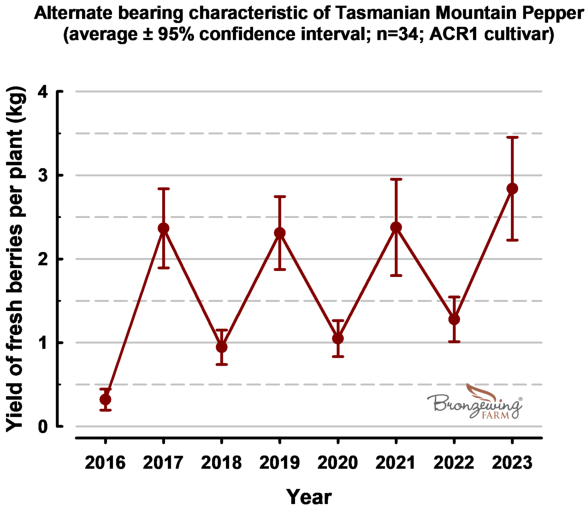
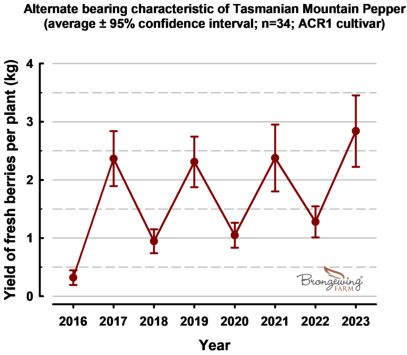
Alternate bearing/Biennial bearing: Mountain Pepper
appears to produce big crops one year and small crops
the next. For suppliers harvesting directly from the native
bush, this is a big problem as their supplies are very
limited on a regular basis. This biennial bearing is very
typical of fruit crops such as apples, peaches, etc, and
growers try to reduce this habit by thinning heavy crops
either at flowering or at early fruit set.
Our farmed production of Tasmanian DEVIL
®
pepper
means we can predict and plan for this. We also view the
process differently - we have a baseline production..., and
some years, we have a surplus of berries.
In the future we will look at how pruning, fertilization and
other crop management practices can reduce the extent
of alternate bearing. The figure below shows the biennial
nature of our ACR1 cultivar which was planted in 2010
and produced an initial crop in 2016.
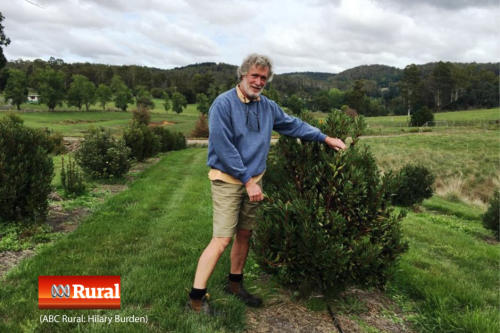
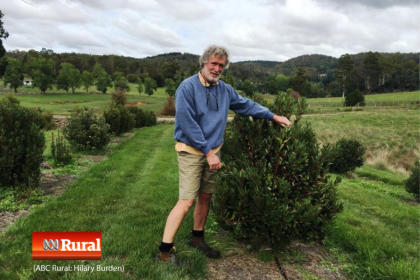
Listen to Hilary Burdens’ ABC Rural Tasmania
interview on Tasmanian Pepperberry harvesting:





_gray-1.png)

© Bronzewing Farm 2013-26
Mountain Pepper Production:
Berry Harvesting: Bronzewing Farm
®
Tasmanian DEVIL
®
Mountain Pepperberries
are hand-harvested from the farm between
April and June every year.
Hand-harvesting is necessary because (a) the
berries don't seem to want to drop off
naturally (in our greenhouses we can have
last season's berries still on the plant when
the current season's berries are developing),
and (b) it is important not to damage the new
buds/growth which develop in the centre of
the whorl of berries. This growth habit is
called monopodial branching (see the lower-
right photograph). Hand-harvesting is why
Tasmanian Mountain Pepper is so expensive
- there are around 4,000 berries in 1 kg of
Mountain Pepper Berries (and this only gives
you around 250 g of dried Mountain
Pepper...). See our harvesting video here.
The fresh pepperberries are graded to
remove twigs and leaves but we typically
leave the berry stems on those fruits where
they haven't fallen off during harvest. We do
this, because they add an 'authentic' look to
our Tasmanian DEVIL
®
peppercorns. Also the
stems are just as 'hot' as the berries.
Alternate bearing/Biennial bearing: Mountain
Pepper appears to produce big crops one year
and small crops the next. For suppliers harvesting
directly from the native bush, this is a big problem
as their supplies are very limited on a regular
basis. This biennial bearing is very typical of fruit
crops such as apples, peaches, etc, and growers
try to reduce this habit by thinning heavy crops
either at flowering or at early fruit set.
Our farmed production of Tasmanian DEVIL
®
pepper means we can predict and plan for this.
We also view the process differently - we have a
baseline production..., and some years, we have a
surplus of berries.
In the future we will look at how pruning,
fertilization and other crop management practices
can reduce the extent of alternate bearing. The
figure below shows the biennial nature of our
ACR1 cultivar which was planted in 2010 and
produced an initial crop in 2016.
Listen to Hilary Burdens’ ABC Rural Tasmania
interview on Tasmanian Pepperberry harvesting:


- Home
- All about Tasmanian DEVIL Mountain Pepper
- >>> The Plant
- >>> Human Health & Nutrition
- >>> Pepper Berry or Leaf?
- >>> Cultivation & Agronomy
- >>> Harvesting
- >>> Drying Techniques
- >>> Devilish Taste
- >>> Celebrity Chef Use
- >>> Why buy our Pepper?
- >>> Use & Tips
- Pepper Shop
- >>> Mountain Pepper
- >>> Tasmanian Pepper Mills
- About us/News & Media/Contact us
- >>> About us
- >>> News and Media
- >>> Wholesale/Bulk Order Enquiry
- >>> Contact us